
While I have highlighted that I was going to try this new-old-fangled technique to attempt to save my hair, I didn’t really provide details about how the process works or why in the hell it might be effective.
Not that I followed cancer innovations super carefully pre-diagnosis, but I really hadn’t heard of this technique. To me, and probably most of you, and to everyone who has seen a cancer movie or real life with someone who has had to go through chemo, hair loss is not only a side effect but in many cases, a sure thing. My own oncologist told me essentially “yup, everyone who has AC chemo loses heir hair at about day 14-17.”
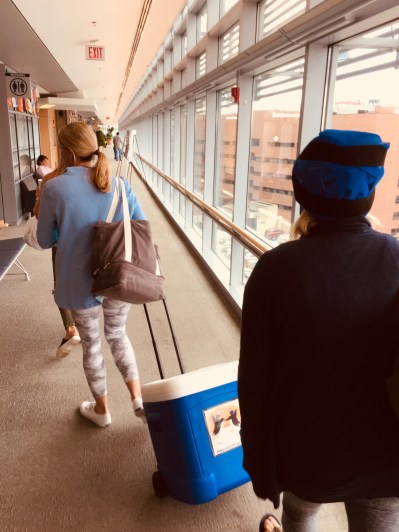
It was actually my doctor who flagged cold capping as a solution. He has had a handful of patients do it in the last 18 months, all with good effect. I’m am the 5th patient he has had, and he had another right now who is going through it, but his previous four patients were 4/4 in keeping their hair. There are a few companies who sell the caps and there are a couple of ways they can be used — one gives you caps you chill in a cooler filled with dry ice and the other uses a machine that kind of looks like the hair dryers in a salon — except it is blowing cold air, not hot, onto the head. I have the former, which means that every other Tuesday, Mark is going to an ice company and picking up 70 pounds of dry ice so that I have enough for the next day.
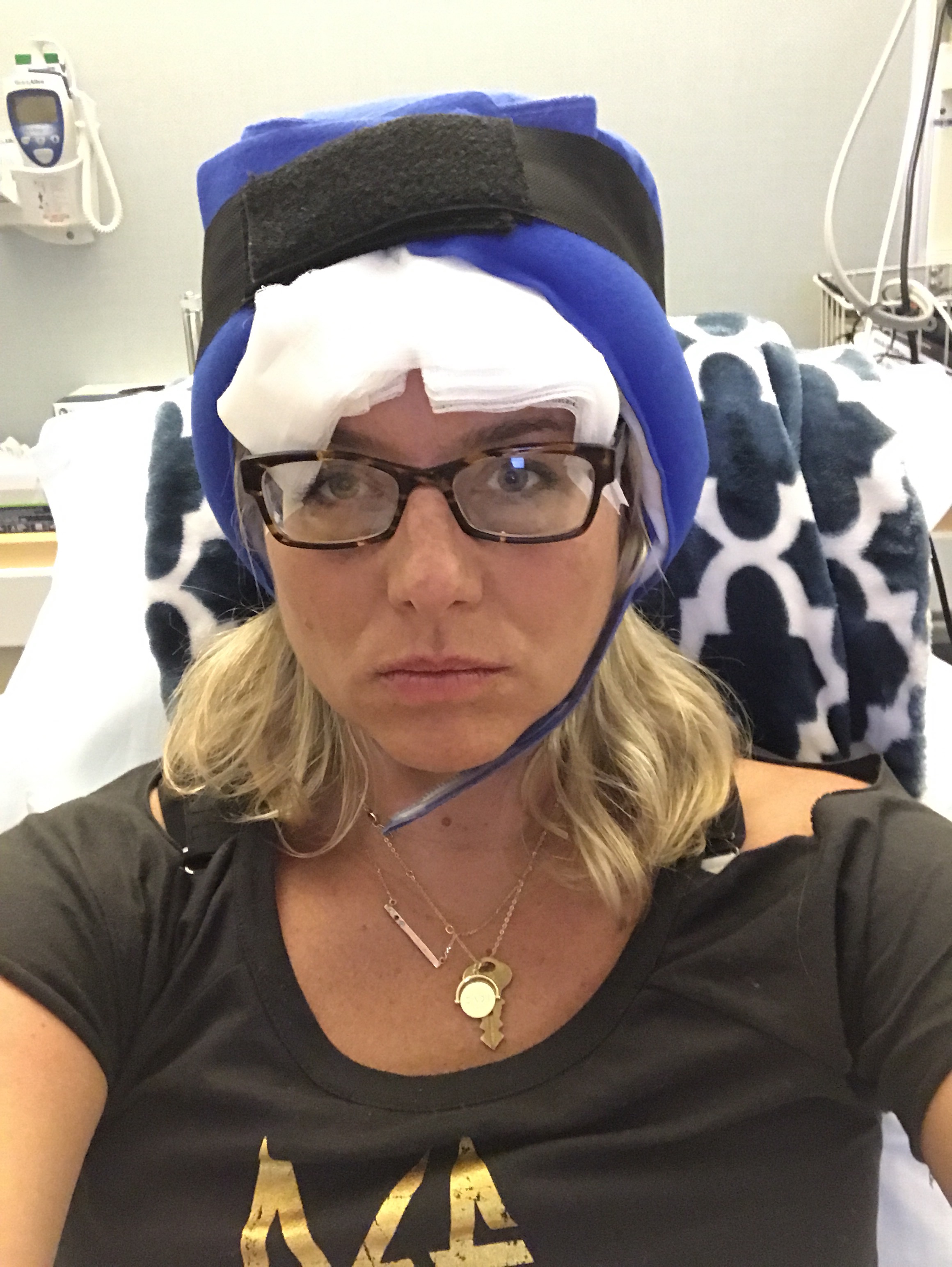
Dry ice exists in its frozen state at a temperature of -109.3 degrees Fahrenheit. Did you know that? I didn’t. Point is, it’s a lot colder than regular ice, which is critical because the caps I put on my head need to be -28 degrees Fahrenheit for the treatment to be effective. We have four caps, all chilled in the cooler and all eventually put onto my head to keep it cold. The caps need to be changed every 25 minutes for several hours, with the first one going on an hour before chemo starts, and the last one coming off 5 hours after chemo has ended. The idea is that the scalp gets so cold that the hair follicles go into a sleep-like state and don’t absorb the toxins in the chemo. If the hair follicles don’t absorb the toxins, they don’t die. If they don’t die, the hair doesn’t want to fall out.
People have asked if it hurts, and it does, the way cold ice cream hurts when you eat it or your bare hands hurt when you touch snow. I take a couple of Tylenol and a muscle relaxer as part of my chemo regimen and the pain goes away after about ten minutes and then I am numb for the day. My sister said my scalp is actually frosty when she changes the caps. So weird.
Chemo is pretty mellow and quiet — I’m just essentially sitting there with an IV in my arm, but the capping process ensures that things stay pretty busy throughout the day around me. I am eternally grateful for my sisters and close friends who have signed on to help me — if I do keep my hair, it will completely alter this experience and really be an enormous gift to me and my children.
It is now day 27.
I still have ALL my hair.
For more information about the caps, or to tell a friend who might be interested in using them, go here.






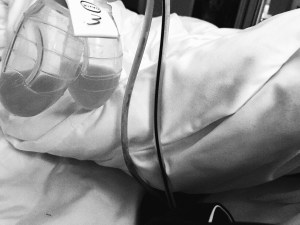 surgical drains, the other kind of fun bag
 I didn't have time for this.